Learning-based modelling and real-time control of urban drainage networks
Doctoral thesis, 2026
Learning-based hydraulic modelling and real-time control of urban drainage networks.
I received my Ph.D. in Environmental Engineering from City University of Hong Kong and my D.Eng. in Environmental Engineering from Tongji University, supervised by Prof. Zhiguo Yuan and Prof. Zhenliang Liao, respectively. During my doctoral studies, I was a member of the Smart Water and EnviroBiotech Team (SWEB) at CityUHK. I received my B.Eng. in Environmental Engineering from Tongji University in 2020. I am currently an AI Algorithm Engineer.

Learning-based hydraulic modelling and real-time control of urban drainage networks.

Accelerates RL training with GPU parallelization while ensuring reliability with truncated rollouts.

Derives the gradients of the MPC objective function (output) to the control action (input) along the neural network for a L-BFGS-B optimizer.

Control-oriented real-time modelling of drainage flow routing with a spatio-temporal GNN model with physics-guided hydraulic regulations.

Using multi-agent reinforcement learning to control multiple drainage valves and pumps with real-time communication fail-safe performance.
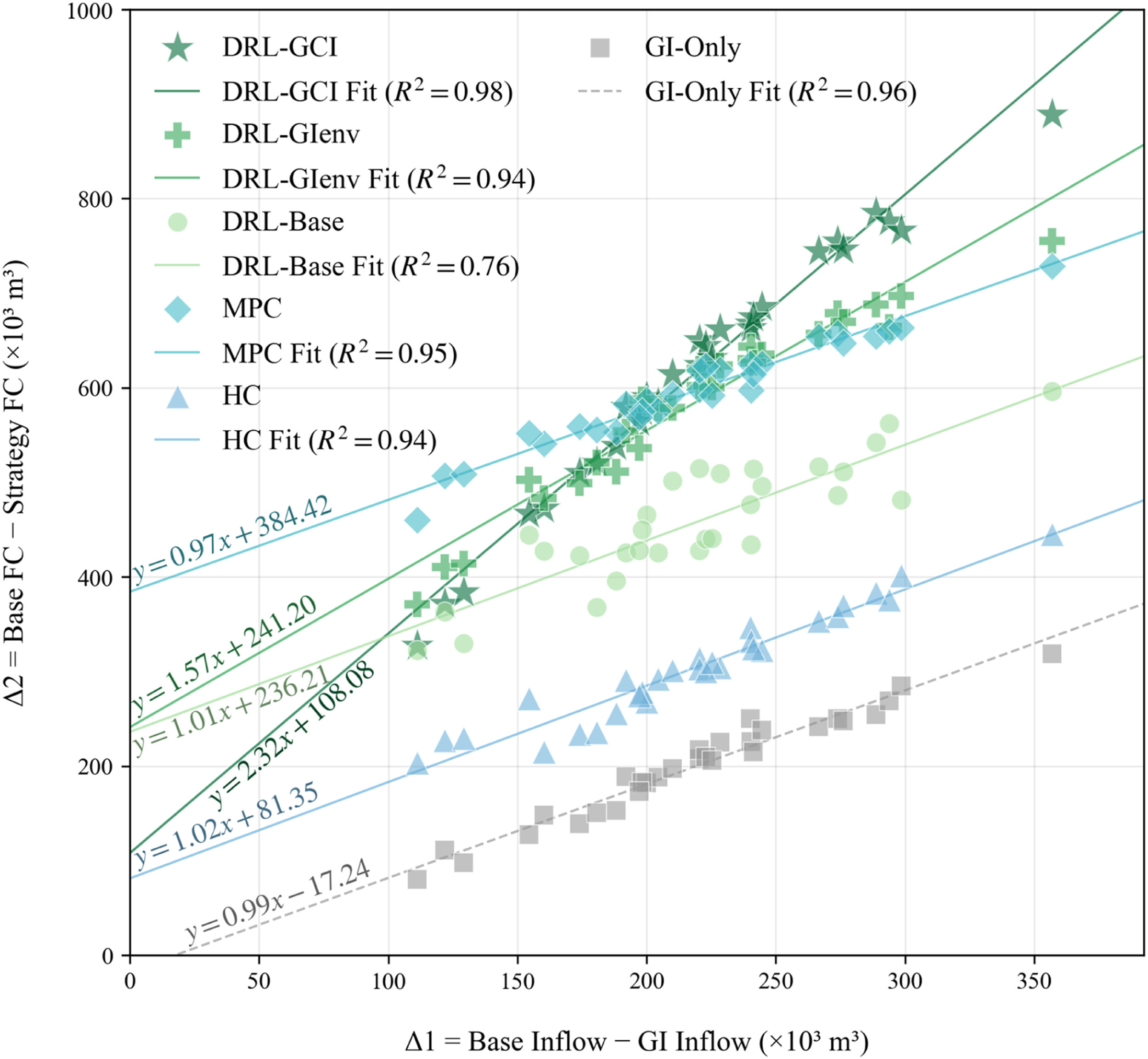
Integrates a green infrastructure cooperative index into deep reinforcement learning to improve storage utilization and reduce flooding and sewer overflows.

Introduces a graph-based frequency-domain model for highly efficient sewer hydraulic simulation by decoupling spatial and temporal dependencies.
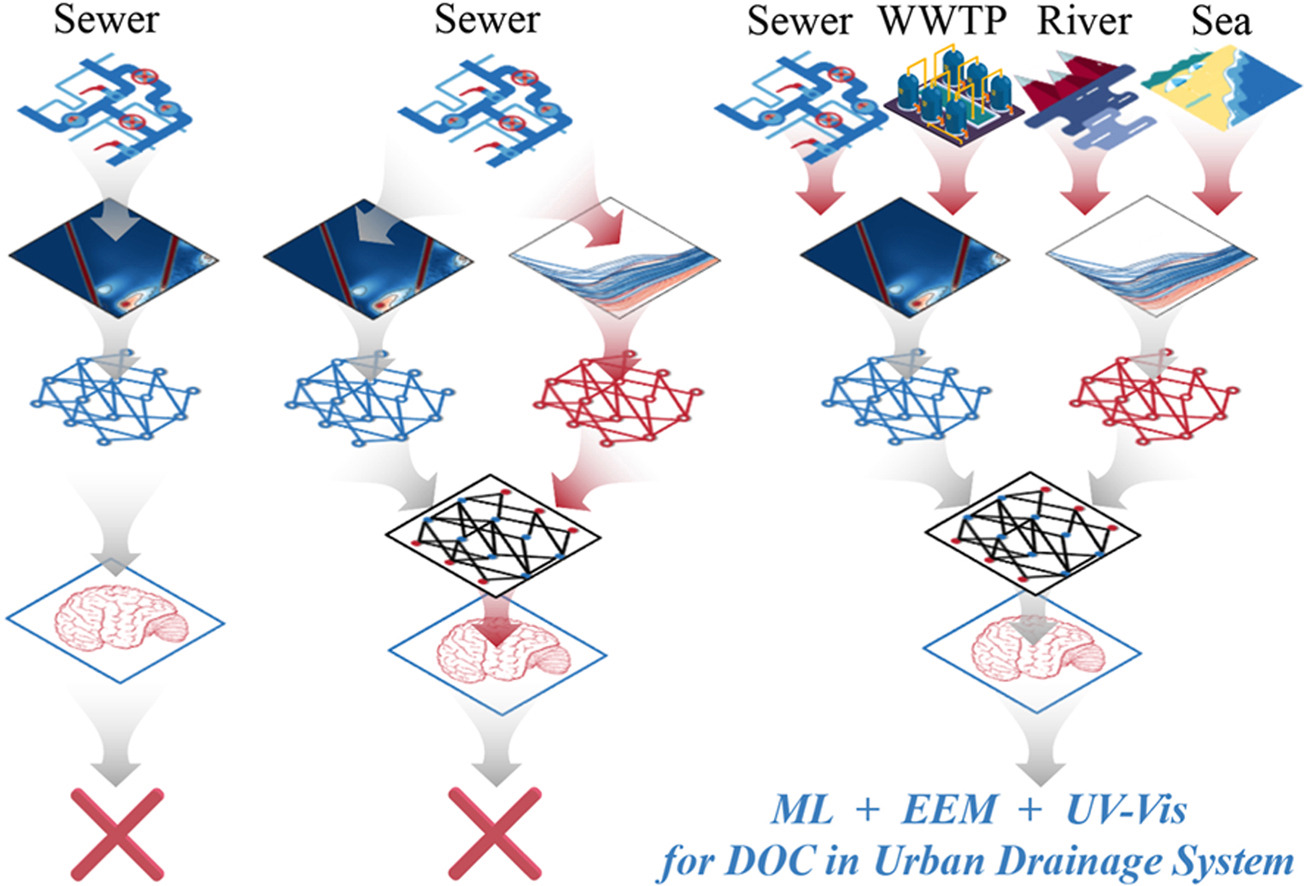
Combines EEM fluorescence, UV-Vis spectroscopy, and machine learning for reagent-free dissolved organic carbon monitoring across urban drainage systems.
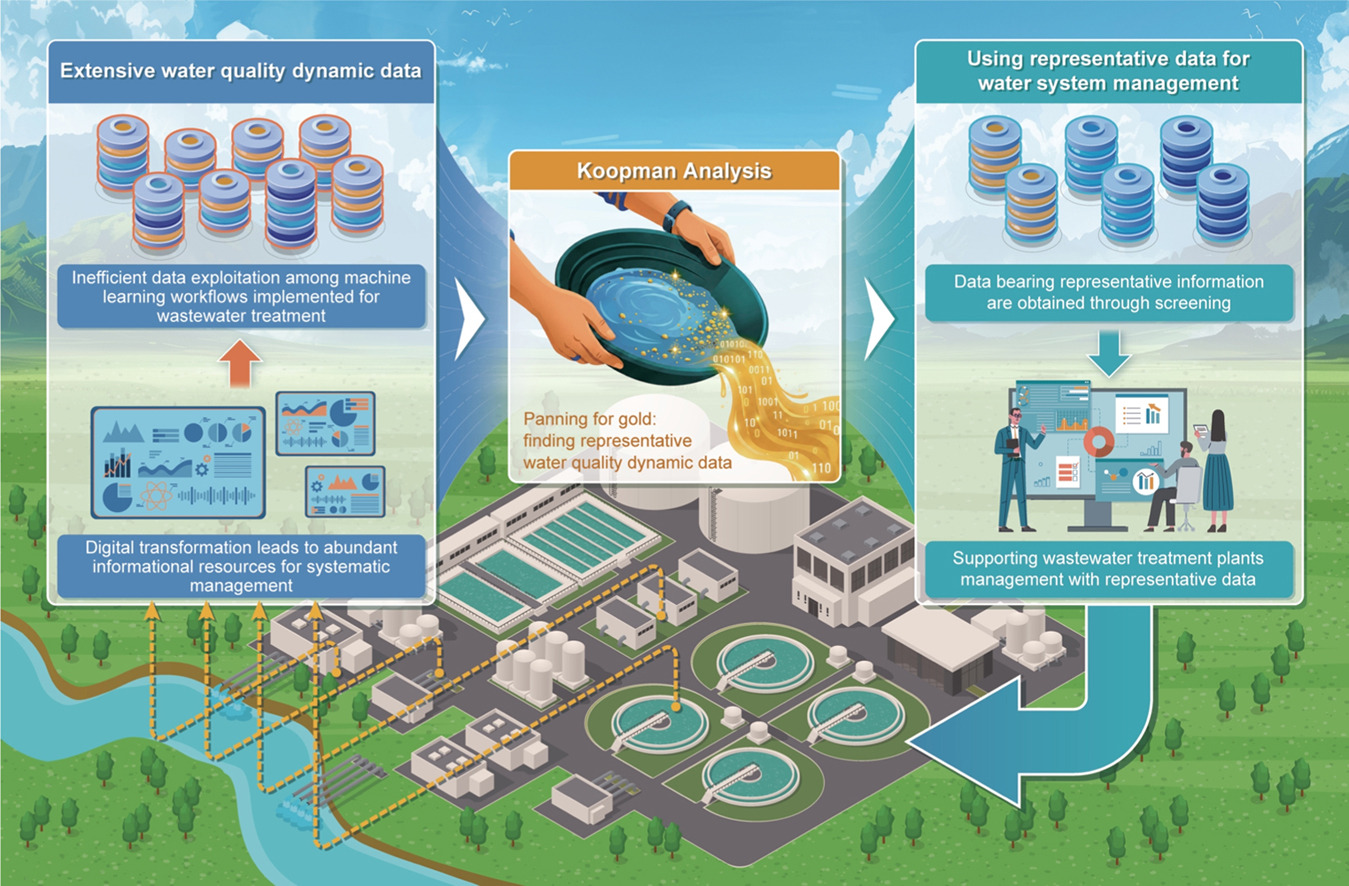
Selects representative water quality dynamics using Koopman analysis and clustering to reduce data requirements for machine learning in wastewater treatment.

Develop a simple equation to estimate CH4 emissions and extrapolate to a global scale of 1.18 - 1.95 Mt/year.

Pretrain RL agent for RTC with knowledge-carrying data from engineering experiences and strategies.

Use the derivative of UDS resilience indicator to train a deep reinforcement learning agent.

Use transformer networks and loss with punishment to optimize management of urban water supply system.

Assess both risk and resilience with 1D2D modelling and threshold classifications.

Use spatial and temporal attention mechanisms to enhance CNN-LSTM models for predicting surface water quality.

Avoid local optima problem and ensure effcient locatilization of contaminated sources in WDS combining SA and PSO.

Detect contamination timely and accurately from monitoring data considering water quality baseline and possible anomalies.

Interpret the learned control policy of DRL with Sobol, tree-based logics, and conditional distributions.

Learning a 3D hydrodynamic lake model from monitoring data using Koopman operator and transfer learning.

Safe learning control of urban drainage systems with a robust reward function.
Compare rule-based control, model predictive control, and reinforcement learning control in computing load and normalized performance.

Training a Koopman emulator of urban drainage dynamis for reinforcement learning control.

RL agents' decisions are action votes and further evaluated in real time to improve reliability and safety.